
Understand that Delta-9 THC cartridges affect everyone’s mental health differently—what helps one person manage anxiety might worsen symptoms for another. If you’re considering vaping Delta-9 THC for mental health reasons, start by honestly assessing your current mental state and family history of mood disorders, as THC can amplify underlying conditions like anxiety, depression, or psychosis, especially with regular use.
Track your experiences carefully by noting how you feel before, during, and after use—including sleep quality, motivation levels, and emotional patterns over several weeks. Many Canadians report initial relief from stress or racing thoughts, but some notice increased paranoia, difficulty concentrating, or emotional numbness with continued use.
Connect with your healthcare provider or mental health professional before making THC part of your wellness routine, particularly if you’re taking psychiatric medications or have experienced previous mental health challenges. They can help you weigh potential benefits against risks specific to your situation.
Recognize warning signs that vaping may be harming rather than helping: needing more to achieve the same effect, using it to cope with daily stress, withdrawing from activities you once enjoyed, or experiencing increased anxiety between sessions. These patterns suggest it’s time to pause and seek support.
You’re not alone in navigating this complex intersection of cannabis use and mental wellness—reaching out shows strength, not weakness.
Understanding Delta-9 THC Vape Cartridges in Canada
How Vaping Delta-9 THC Affects Your Brain Differently
When you vape Delta-9 THC, the effects hit differently than eating an edible or using other methods—and understanding this difference matters for your mental health.
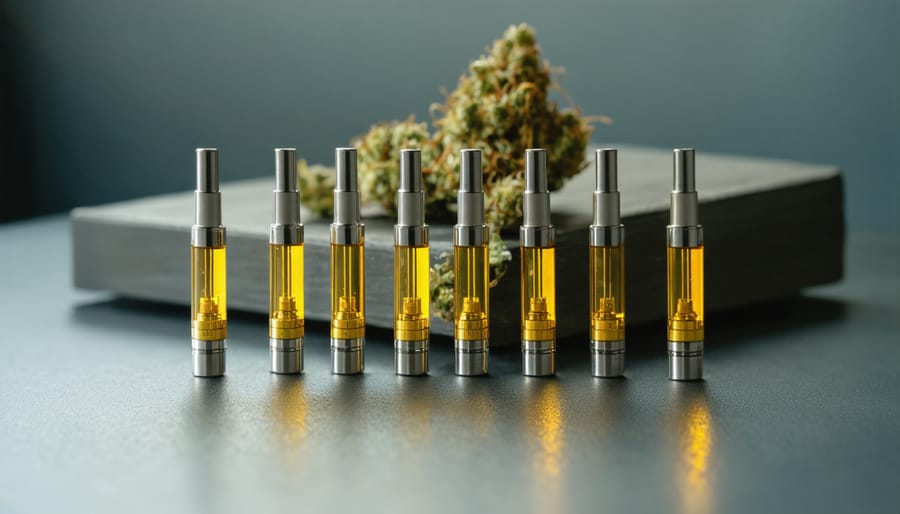
Vaping delivers THC directly to your lungs, where it quickly enters your bloodstream and reaches your brain within minutes. This means you’ll feel the effects almost immediately, often within 2-5 minutes, compared to edibles which can take an hour or more. While this rapid onset might seem convenient, it also means your brain experiences a more intense, concentrated dose of THC all at once.
Think of it like the difference between sipping a drink slowly versus taking a shot—the same substance affects you quite differently based on how quickly it enters your system.
For someone managing anxiety or depression, this rapid intensity can be a double-edged sword. Sarah, a community member from Ontario, shared: “The first time I vaped, I wasn’t prepared for how quickly it hit me. My anxiety actually spiked because the feeling came on so strong and fast.”
This quick onset also makes it harder to gauge your dose. With edibles, you have time to wait and assess how you’re feeling. With vaping, by the time you realize you’ve had too much, you’re already there.
The intensity matters because mental health conditions can make you more sensitive to sudden changes in how you’re feeling. If you’re considering vaping Delta-9 THC, start with very small amounts and give yourself time between puffs to understand how it’s affecting you.
The Real Mental Health Effects You Should Know About
When Delta-9 THC Might Help
Some people find that Delta-9 THC vapes offer relief from mental health challenges, though experiences vary widely from person to person. Understanding when it might help—and when it might not—can guide you toward making informed choices for your wellbeing.
Many users report that low to moderate doses of Delta-9 THC help ease racing thoughts and promote a sense of calm. For those dealing with everyday stress or situational anxiety, some find the immediate effects of vaping provide quick relief when tensions build. The fast-acting nature means you can feel the effects within minutes, allowing for better dose control compared to edibles.
Delta-9 THC may also help with mood regulation for some individuals. People describe feeling more present, experiencing temporary relief from negative thought patterns, or finding it easier to relax after difficult days. For those struggling with sleep issues related to anxiety or stress, some report that evening use helps quiet their minds enough to rest.
However, it’s crucial to maintain realistic expectations. What works beautifully for one person might not work—or could even worsen symptoms—for another. Some people find that while CBD for mental health offers gentle support without intoxication, Delta-9 THC’s psychoactive effects can feel overwhelming or increase anxiety, especially at higher doses.
Personal tolerance, current mental health status, strain type, and dosage all significantly influence outcomes. Someone dealing with panic disorder might have a very different experience than someone managing work-related stress.
The key is starting slowly, paying close attention to how your body and mind respond, and being honest with yourself about whether it’s genuinely helping or creating new challenges. Delta-9 THC isn’t a replacement for professional mental health support—it’s one tool that some find helpful alongside comprehensive care.
When It Can Make Things Worse
While Delta-9 THC vapes might help some people, it’s important to talk honestly about when they can make things harder. This isn’t about creating fear—it’s about making informed choices that protect your wellbeing.
For some people, THC can actually increase anxiety rather than ease it. You might start vaping to feel calmer, but then experience racing thoughts, heightened worry, or even panic attacks. This happens more often with higher doses or if you’re new to THC. One person shared: “I thought it would help me relax after stressful days, but instead I’d lie awake overthinking everything, feeling my heart race.”
Paranoia is another real concern. Some users describe feeling watched, judged, or unsafe—feelings that can be especially distressing if you’re already managing anxiety or trust issues. These effects can linger even after the THC wears off, impacting your daily life.
If you’re living with certain mental health conditions, the risks increase significantly. Research shows THC can trigger or worsen symptoms for people with schizophrenia, bipolar disorder, or psychosis. It can also interfere with understanding mental illness patterns and make it harder to recognize when you need support.
Regular vaping can also lead to dependence, where you feel you need it to cope with everyday stress. This can mask underlying issues that need attention and make it harder to develop other healthy coping strategies.
Young people face particular risks, as cannabis use during brain development can affect memory, learning, and emotional regulation long-term.
If you notice your mood getting worse, anxiety increasing, or mental health symptoms changing after using THC vapes, it’s worth reconsidering. Your mental health journey deserves choices that truly support your wellbeing.
Who Should Think Twice Before Vaping Delta-9 THC
While Delta-9 THC vapes aren’t right or wrong for everyone, certain situations call for extra caution and careful conversation with healthcare providers who understand your unique story.
If you’re living with depression, it’s worth knowing that THC can affect people differently. Some folks find temporary relief, while others experience worsened symptoms, particularly low motivation or emotional numbness. Research suggests that regular cannabis use may increase depression risk in some individuals, especially younger users whose brains are still developing.
For those navigating anxiety disorders, the relationship with THC can be particularly complicated. While some people report short-term relaxation, THC often intensifies anxiety symptoms, especially at higher doses. Many people describe uncomfortable experiences including racing thoughts, paranoia, or panic attacks. If you’re already managing anxiety, these reactions can feel especially overwhelming and may interfere with the coping strategies you’ve worked hard to develop.
People living with bipolar disorder face unique considerations. THC can potentially trigger manic episodes or interfere with mood stability that you’ve carefully maintained. The unpredictable nature of how THC affects mood regulation makes it particularly risky when you’re working to keep your equilibrium.
If you or a family member has schizophrenia or related conditions, please approach THC with significant caution. Strong scientific evidence links cannabis use, particularly products high in THC, to earlier onset of psychotic symptoms and more severe episodes. For those with family histories of these mental health conditions, the risks deserve serious consideration.
Young people under 25 warrant special mention. Your brain is still developing, and THC can impact how it forms connections, potentially affecting memory, learning, and emotional regulation long-term.
If you’re pregnant, planning pregnancy, or breastfeeding, avoiding THC products protects your baby’s developing brain.
This isn’t about judgment—it’s about making informed choices that honour where you are in your mental health journey. Your psychiatrist, family doctor, or mental health counselor can help you weigh these considerations based on your personal circumstances. Sometimes the wisest act of self-care is choosing not to use something, even when others around you might.
Real Stories from Canadians Navigating THC and Mental Health
Everyone’s journey with Delta-9 THC vapes and mental health looks different. Understanding these varied experiences can help you make informed decisions about your own wellbeing.
**Finding Relief and Balance**
Marcus, a 34-year-old from Vancouver, shares that controlled vaping helped him manage anxiety symptoms that hadn’t responded well to other approaches. “I was skeptical at first, but using a low-dose vape in the evenings gave me the space to actually relax,” he says. “The key for me was being honest with my doctor and keeping my doses consistent and small.” Marcus emphasizes that what works for him might not work for everyone, and he credits ongoing therapy alongside his cannabis use for his improved mental health.
Sarah’s experience highlights the importance of timing and support. After finding traditional anxiety medications difficult to tolerate, she explored Delta-9 vapes with her healthcare provider’s guidance. “It wasn’t a magic solution,” she notes. “But combined with counseling and lifestyle changes, it became one tool in my mental health toolkit.”
**Cautionary Experiences**
Not everyone’s story has been positive. Jake, 28, describes how regular vaping that initially seemed helpful eventually worsened his anxiety. “I thought I was managing my stress, but I was actually masking deeper issues,” he reflects. “When I stopped, withdrawal made everything harder, and I realized I’d been avoiding dealing with the real problems.” Jake’s turning point came when he connected with a mental health support group and began addressing underlying trauma.
Melissa warns about the risks for those with certain conditions. After experiencing increased paranoia and mood instability, she learned that her family history of bipolar disorder made THC use particularly risky. “I wish I’d known more before I started,” she shares.
These stories remind us that individual differences matter tremendously. What helps one person might harm another, making professional guidance and self-awareness essential.
Making Safer Choices If You Decide to Use Delta-9 THC Vapes
If you’ve decided to use Delta-9 THC vapes, there are steps you can take to reduce potential risks to your mental health. Think of these as tools to help you stay more in control of your experience.
**Start low and go slow** is the golden rule. If you’re new to vaping THC or trying a new product, begin with just one small puff and wait at least 15-20 minutes to feel the full effects before considering more. Delta-9 THC vapes can be surprisingly potent, and it’s much easier to take more than to deal with an overwhelming experience.
**Know what you’re using.** Purchase from licensed retailers who can show you lab testing results. Understanding the THC percentage and whether there are other cannabinoids like CBD in the product helps you make informed choices. Products with some CBD content may provide a more balanced experience for some people.
**Pay attention to your mental state** before using. If you’re already feeling anxious, depressed, or emotionally vulnerable, THC might amplify those feelings rather than help. Consider whether this is truly the right moment.
**Create a supportive environment.** Use in a comfortable, safe space, ideally when you don’t have responsibilities immediately afterward. Having a trusted person nearby, especially when trying something new, can provide reassurance.
**Watch for warning signs** that THC isn’t working well for you. These might include increased anxiety or paranoia during use, feeling disconnected from reality, needing more to get the same effect, or noticing your mood worsening in the days after use.
**Set boundaries for yourself.** Decide in advance how often you’ll use and stick to it. Daily use increases the risk of dependence and mental health impacts.
Remember, it’s completely okay to reach out for support if you’re concerned about your use or mental health. Speaking with a healthcare provider, counsellor, or calling a mental health helpline doesn’t mean you’ve failed—it means you’re taking care of yourself.
Where to Find Support in Canada
If you’re struggling with cannabis use or experiencing mental health concerns related to vaping Delta-9 THC, know that support is available across Canada—and reaching out is a sign of strength, not weakness.
**For immediate crisis support**, contact the Canada Suicide Prevention Service at 1-833-456-4566 (available 24/7) or text 45645. If you’re in immediate danger, call 911 or go to your nearest emergency department.
**Mental health and addiction services** are accessible through several channels. Wellness Together Canada (wellnesstogether.ca or 1-866-585-0445) offers free counseling and resources. Most provinces also have dedicated addiction helplines—search “[your province] addiction helpline” to find yours. Organizations like the Canadian Mental Health Association (cmha.ca) provide local support and can connect you with mental health professionals in your community.
**For cannabis-specific guidance**, contact your healthcare provider or visit Canada’s Cannabis Information Hub (canada.ca/cannabis) for evidence-based information. Many community health centers now offer specialized substance use counseling.
**Peer support matters too**. Look for local support groups through community centers, faith organizations, or online communities where people share their experiences navigating cannabis use and mental health. Sometimes talking with someone who truly understands makes all the difference.
Remember, seeking help isn’t about judgment—it’s about finding the right support for your unique situation and taking care of yourself.
Making decisions about Delta-9 THC vapes and your mental health doesn’t have to feel overwhelming. You deserve accurate information, compassionate support, and the freedom to ask questions without judgment. Whether you’re currently using cannabis, considering it, or supporting someone who is, remember that every person’s experience is unique—and that’s okay.
The relationship between cannabis and mental health is complex, but you don’t have to navigate it alone. Healthcare providers across Canada are increasingly open to discussing cannabis use honestly and collaboratively. Bringing your questions and concerns to your doctor, therapist, or counselor is a sign of strength, not weakness.
If you’re struggling with your mental health, whether related to cannabis use or not, help is always available. Reaching out is the first step toward feeling better. Your mental wellbeing matters, and finding the right support—whether that means adjusting your cannabis use, exploring other treatments, or simply talking things through—can make all the difference.
Trust yourself. Ask questions. Seek support. You’re worth it.