Recognize the warning signs: if you find yourself chasing losses at MoonBet or any online gambling platform, lying about time or money spent, or feeling anxious when you can’t gamble, you’re experiencing common indicators that gambling is affecting your mental health. Contact the National Problem Gambling Helpline immediately at 1-800-522-4700 for free, confidential support available 24/7. Set up website blockers like Gamban or BetBlocker on all your devices right now to create an immediate barrier between you and gambling sites. Reach out to a trusted friend or family member today and share what you’re experiencing, because isolation makes these struggles worse.
The intersection of online gambling and mental health is more critical now than ever. With smartphones putting casinos in our pockets, the always-available nature of online gambling creates unique mental health challenges, from anxiety and depression to financial trauma and relationship strain. You’re not alone in this struggle, and seeking help isn’t a sign of weakness but a courageous step toward recovery.
This guide connects you with concrete support resources, helps you understand the psychological impact of online gambling, and shares stories from people who’ve walked this path before you. Whether you’re concerned about yourself or someone you care about, support exists and recovery is possible.
The Hidden Toll: How Online Gambling Affects Your Mental Health
The 24/7 Accessibility Problem
Unlike traditional gambling venues with closing times and physical distance, online gambling platforms never sleep. This constant availability creates a unique mental health challenge that many people don’t anticipate when they first start playing. Your smartphone becomes a portable casino, available during lunch breaks, sleepless nights, or moments of stress when you’re most vulnerable.
Research from the National Council on Problem Gambling has identified that this 24/7 access significantly increases mental health risks associated with online gambling addiction. The elimination of natural boundaries that physical venues provide creates specific vulnerabilities:
- Removal of closing times and travel requirements eliminates natural breaks in gambling behavior
- Impulsive gambling during emotionally vulnerable moments becomes easier without physical barriers
- Escalation from occasional recreational play to compulsive patterns occurs more rapidly
- Sleep disruption and relationship strain intensify as gambling extends into late-night hours
- Isolation without social oversight allows problematic behaviors to develop unnoticed
The privacy of online gambling can feel safer at first, but it often means struggling alone for longer before reaching out for help. According to the International Centre for Youth Gambling Problems and High-Risk Behaviors at McGill University, this isolation is a key factor in how online gambling addiction differs from traditional forms. You might find yourself gambling at 3 AM, hiding your phone from family members, or refreshing gambling apps compulsively throughout the day. This constant access can quickly transform occasional play into a pattern that affects your sleep, relationships, and emotional wellbeing. Understanding this unique challenge is an important first step toward finding the support you deserve.
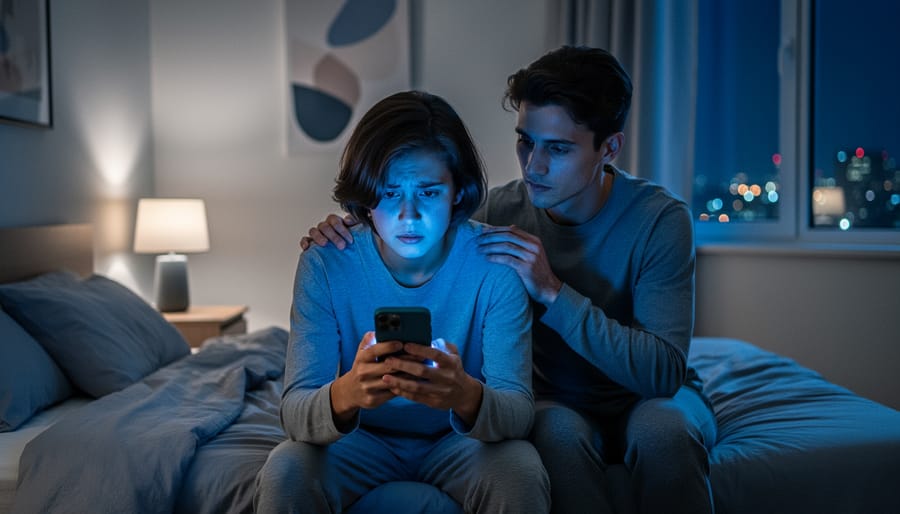
The constant accessibility of online gambling through smartphones can intensify mental health challenges and feelings of isolation.
When Gambling Becomes More Than a Game
Sometimes what starts as entertainment can gradually shift into something that weighs heavily on your mind and heart. You’re not alone if you’ve noticed gambling taking up more mental space than it used to, or if it’s beginning to affect how you feel about yourself.
There are gentle warning signs worth paying attention to. You might find yourself thinking about gambling even when you’re not playing, or feeling restless or irritable when you try to cut back. Perhaps you’ve started gambling to escape difficult feelings or to feel better when you’re down, stressed, or anxious. These problem gambling signs are recognized by addiction medicine professionals as early indicators that warrant attention.
Many people notice changes in their sleep patterns or appetite. You might feel guilty or ashamed after gambling, yet find it hard to stop. Financial worries may be mounting, and you could be withdrawing from friends, family, or activities you once enjoyed. Some people describe feeling like they need to gamble with increasing amounts to get the same feeling, or chasing losses in hopes of winning back what they’ve lost. Clinical psychologists identify this pattern of tolerance and loss-chasing as key gambling addiction symptoms that mirror other behavioral addictions.
These experiences don’t make you weak or flawed. They’re signs that gambling may be affecting your mental health in ways that deserve care and attention. The American Psychiatric Association’s diagnostic criteria validate these patterns as clinically significant indicators of gambling disorder. Recognizing these patterns is actually a sign of strength and self-awareness. It’s the first step toward getting the support you deserve.
You’re Not Alone: Real Stories from Real People
When you’re struggling with online gambling and the weight it places on your mental health, it can feel like you’re the only one going through this. But you’re not. Thousands of people have faced similar challenges, and many have found their way forward. Here are some gambling recovery stories that show what’s possible.
Marcus, a 34-year-old teacher, started betting on sports during the pandemic. “It began as something fun to do while watching games at home,” he shares. “Within months, I was gambling every day, sometimes during work breaks. I felt this constant anxiety, even when I won. The shame was overwhelming.” Marcus reached out to a therapist who specialized in gambling issues and joined an online support group. “Talking to others who understood what I was going through changed everything. I realized my feelings were valid, and recovery was possible.”
Sarah’s story started differently. At 28, she turned to online casino games during a difficult breakup. “I was already dealing with depression, and gambling became my escape. Except it wasn’t an escape at all. It made everything worse.” She describes hitting rock bottom when she couldn’t pay her rent. “I finally told my sister what was happening. She helped me find a counselor and sat with me during my first call to a helpline. Having someone who didn’t judge me made all the difference.”
For 42-year-old David, recovery meant addressing both his gambling and underlying anxiety. “I’d been using gambling to numb my anxiety for years. When I finally sought help, my therapist helped me see the connection. We worked on managing my anxiety in healthier ways, and gradually, the urge to gamble lessened.”
These gambling recovery stories share common threads: reaching out for help, finding understanding communities, and recognizing that recovery is a journey, not a destination. Each person faced setbacks along the way, but they kept moving forward.
What helped them most? Having people who listened without judgment. Accessing professional support tailored to their needs. Connecting with others who truly understood their struggles. They learned that asking for help wasn’t weakness; it was the strongest thing they could do.
If you’re reading this and see yourself in these stories, know that recovery is possible for you too. Your story doesn’t end here. With the right support and compassion for yourself, you can move toward a healthier relationship with gambling and better mental health.
Where to Find Help: Mental Health Support Options
Professional Counseling and Therapy
Professional therapy can be a turning point for those struggling with online gambling. Cognitive Behavioral Therapy (CBT) is one of the most effective approaches for gambling addiction, helping you identify and change thought patterns that drive gambling urges. Research from the Canadian Centre on Substance Use and Addiction shows that CBT for gambling addiction produces significant reductions in gambling behavior and associated distress. Through this structured therapy, you’ll learn practical coping strategies and develop healthier ways to manage stress and emotions.
Specialized gambling counselors understand the unique challenges you’re facing. These mental health professionals have specific training in addiction and can help you explore the underlying reasons behind your gambling while creating a personalized recovery plan. They won’t judge you, they’re there to support your journey.
Accessing gambling therapy in Canada is more straightforward than you might think. Many provinces offer free or low-cost counseling through problem gambling programs. Here are concrete steps to get started:
- Contact your family doctor for referrals to counselors covered by provincial health plans
- Call your provincial problem gambling helpline for immediate connection to local specialists
- Search for therapists specifically trained in gambling addiction through your province’s mental health directory
- Inquire about sliding-scale fees or publicly funded services if cost is a concern
- Consider online therapy platforms if in-person sessions aren’t accessible due to location or scheduling
Most provinces have expanded their virtual care options since 2024, making it easier to fit sessions into your schedule without travel. Private therapists are another option, and many adjust their fees based on income. Remember, reaching out for professional support isn’t a sign of weakness, it’s a courageous step toward reclaiming control of your life and wellbeing.
Support groups provide a safe space to connect with others who understand the challenges of gambling and mental health struggles.
Support Groups and Peer Communities
You don’t have to face this alone. Connecting with others who truly understand what you’re going through can be one of the most powerful steps in your recovery journey. Support groups create safe spaces where you can share your experiences without judgment and learn from people who’ve walked similar paths.
Gamblers Anonymous has been helping people recover from gambling addiction for decades. These free meetings, available both in-person and online, follow a twelve-step program that’s helped countless individuals regain control. Research consistently demonstrates the effectiveness of peer support in addiction recovery, with studies showing that regular attendance at gambling support groups significantly improves abstinence rates and reduces relapse. The online format makes it easier than ever to attend from the comfort of your home, which can be especially helpful when you’re just starting out.
Beyond traditional groups, online communities offer 24/7 support when you need it most. Forums, chat rooms, and social media groups dedicated to gambling recovery provide immediate connection during challenging moments. Many people find comfort in reading others’ stories and realizing they’re not alone in their struggles with casino and sports betting.
Sarah, who’s been in recovery for two years, shares: “Finding my online support group changed everything. These people understood the shame and the sleepless nights. They celebrated my small victories and reminded me why I was fighting when things got hard.”
The beauty of peer support is mutual understanding. These aren’t just sympathetic listeners, they’re people who’ve experienced the same thoughts, fears, and challenges you’re facing now. According to Gamblers Anonymous organizational reports, members benefit from shared experience and collective wisdom that professional treatment alone often can’t provide.
Crisis Support and Helplines
If you’re in crisis or need immediate support related to gambling and your mental well-being, please know that help is available right now. Reaching out takes courage, and trained professionals are ready to listen without judgment.
The National Problem Gambling Helpline (1-800-522-4700) operates 24/7 and offers confidential support in multiple languages. You’ll speak with someone who understands gambling-related distress and can guide you toward appropriate resources. If you prefer text-based support, the Crisis Text Line (text HOME to 741741) connects you with a crisis counselor who can help you work through immediate concerns.
For those experiencing suicidal thoughts or severe mental health crisis alongside gambling issues, the 988 Suicide and Crisis Lifeline provides immediate intervention and support. These services are here whenever you feel overwhelmed, anxious, or uncertain about next steps.
| Resource Name | Contact Method | When to Use |
|---|---|---|
| National Problem Gambling Helpline | 1-800-522-4700 (24/7) | Gambling-related distress, support seeking, resource guidance |
| Crisis Text Line | Text HOME to 741741 | Immediate text-based crisis support for any concern |
| 988 Suicide and Crisis Lifeline | Call or text 988 (24/7) | Suicidal thoughts, severe mental health crisis, urgent intervention |
| SAMHSA National Helpline | 1-800-662-4357 (24/7) | Substance use or mental health treatment referrals |
When you reach out, expect compassionate, confidential conversation. Crisis counselors won’t lecture or shame you. They’ll listen to what you’re experiencing, help you feel less alone, and discuss immediate safety planning if needed. Many people find that making that first call becomes a turning point, even if they weren’t sure what to say beforehand.
You deserve support during difficult moments. These helplines exist because recovery is possible, and no one should navigate these challenges alone. Whether you’re calling for yourself or someone you care about, taking this step matters.
Reaching out for professional help is a courageous first step toward recovery and healing.
Taking the First Step: How to Reach Out for Support
Taking the first step toward support can feel overwhelming, especially when shame or embarrassment holds you back. Many people worry about being judged or fear admitting they need help. But here’s something important to remember: reaching out is a sign of strength, not weakness. Thousands of people have walked this path before you, and support is available.
If you’re feeling nervous about accessing mental health services, start small. You don’t need to share everything at once. A simple opening like “I’ve been struggling with online gambling and it’s affecting my mental health” is enough. The person on the other end, whether a counselor, therapist, or helpline worker, has heard similar stories before and is there to help, not judge.
Before your first appointment, it can help to jot down a few notes. Consider writing about how gambling makes you feel, how often you’re gambling, and what concerns you most. You might also note any questions you have. Remember, there’s no perfect way to ask for help—being honest about where you are right now is what matters.
Many people find it easier to start with anonymous options like helplines or online chat services. These can be great stepping stones if face-to-face conversations feel too daunting. You can test the waters, get comfortable sharing your story, and learn about available resources without pressure.
Sarah, who struggled with online gambling for two years, shares: “I practiced what I wanted to say three times before calling the helpline. My voice shook, but the counselor was so kind. They didn’t make me feel bad about myself—they just listened and helped me figure out next steps.”
Remember, seeking help isn’t a one-time event. It’s okay if your first attempt doesn’t feel perfect. What’s important is that you’re moving forward, and each step gets easier.
Supporting Someone You Care About
Watching someone you care about struggle with online gambling and mental health challenges can feel overwhelming, but your support can make a real difference in their recovery journey. The most important thing to remember is that compassion and patience go hand in hand with healthy boundaries.
Start by choosing the right moment for conversation. Approach them when you’re both calm and have privacy. Use “I” statements to express your concerns without judgment: “I’ve noticed you seem stressed lately” rather than “You have a gambling problem.” This opens dialogue instead of triggering defensiveness.
Listen more than you speak. Sometimes people just need someone to hear them without immediately offering solutions. Validate their feelings and let them know you’re there for support, not to fix everything. Sarah, whose brother struggled with online gambling, shares: “I stopped trying to solve his problems and just started being present. That’s when he finally opened up about getting help.”
Educate yourself about gambling addiction and its mental health impacts. Understanding the psychological factors behind helping someone with gambling addiction helps you respond with empathy rather than frustration. Recovery isn’t linear, and setbacks are part of the process.
Set clear boundaries to protect your own wellbeing. You can offer emotional support without enabling the behavior or sacrificing your financial security. It’s okay to say no to lending money while still expressing care and encouragement for their recovery.
Encourage professional help gently and offer to assist them in finding resources or attending appointments if they’re comfortable. Connect them with support groups where they can find community with others who understand their experience.
Take care of yourself too. Supporting someone through addiction can be emotionally draining. Seek your own support through therapy or caregiver groups to maintain your mental health while being there for your loved one.
Supporting a loved one through their gambling and mental health struggles requires compassion, patience, and healthy boundaries.
Taking the first step toward support can feel overwhelming, but remember that you’re not alone in this journey. The challenges you’ve faced with online gambling and your mental health are real, and acknowledging them takes courage. Recovery isn’t a straight path, and that’s completely okay. What matters is that you’re here, seeking information and considering your options.
Thousands of people have walked this path before you and found their way to healthier relationships with gambling and improved mental well-being. Community support groups, counseling services, and online resources are available whenever you’re ready. Whether you reach out today or take more time to prepare, know that help is waiting without judgment. Your story doesn’t end here. You deserve support, healing, and hope, and recovery is absolutely possible. Take whatever small step feels right for you today.