
Reach out to a trained counsellor at a gambling helpline within the next hour if you’re experiencing anxiety, depression, or distress related to gambling—these services are free, confidential, and staffed by professionals who understand what you’re going through. Whether you’ve noticed changes in your mood, sleep patterns, or relationships because of betpix 365 apostas or any gambling activity, connecting with mental health support isn’t a sign of weakness—it’s a practical step toward regaining control of your life.
Set limits on your gambling exposure immediately by using self-exclusion programs available through provincial gaming authorities, which allow you to ban yourself from casinos, online platforms, and lottery retailers for periods ranging from six months to lifetime. This protective measure creates breathing room to address underlying mental health concerns without the constant temptation to gamble.
Document your feelings and triggers in a simple journal or smartphone app to identify patterns connecting your gambling behaviour with emotional states like loneliness, stress, or boredom. This self-awareness becomes invaluable when working with counsellors and helps you develop personalized coping strategies.
Connect with peer support groups specifically designed for people affected by gambling, where you’ll find others who genuinely understand the shame, guilt, and mental health challenges that often accompany problem gambling. These communities offer practical wisdom from people who’ve walked similar paths and emerged stronger.
You’re not alone in this struggle. Thousands of Canadians face gambling-related mental health challenges each year, and comprehensive resources exist to support your recovery journey. The path forward begins with acknowledging that you deserve support and taking that crucial first step toward healing.
The Real Impact of Problem Gambling on Mental Health

When Excitement Turns to Anxiety
For many people, gambling starts as entertainment—a night out with friends, an occasional lottery ticket, or trying your luck at a casino. There’s nothing wrong with enjoying these activities in moderation. But sometimes, what begins as fun can gradually shift into something more troubling.
The transition often happens quietly. You might find yourself thinking about gambling more frequently, chasing losses, or feeling restless when you’re not playing. Maybe you’ve started betting amounts that make you uncomfortable, or you’re keeping your gambling habits private from loved ones. These changes can be subtle at first, but they’re important signals worth paying attention to.
When gambling becomes problematic, it doesn’t just affect your wallet—it impacts your emotional wellbeing too. Many people experience increased anxiety, especially around money and hiding their activities from others. Depression can set in when losses mount or relationships become strained. Sleep problems, difficulty concentrating, and feelings of shame or guilt are common experiences. Some individuals also face other mental health conditions alongside gambling concerns, creating layers of complexity that feel overwhelming.
Sarah, a teacher from Ontario, shares: “I didn’t realize how much gambling was affecting my mental health until I couldn’t sleep anymore. The constant worry and secrecy were exhausting.”
Understanding this shift is the first step toward getting support. If you’re recognizing these patterns in yourself or someone you care about, know that help is available and recovery is absolutely possible.
The Isolation That Nobody Talks About
When gambling becomes a problem, many people pull away from the very connections that could help them heal. The shame feels overwhelming—you might cancel plans with friends, avoid family gatherings, or create elaborate stories to explain missing money or time. You’re not alone in feeling this way.
This secrecy takes a real toll. Research shows that people struggling with gambling often experience deepening isolation as they hide their behaviour from loved ones. The weight of keeping secrets can intensify anxiety and depression, creating a cycle that feels impossible to break. You might find yourself withdrawing emotionally even when you’re physically present, building walls that keep others at arm’s length.
Sarah, a teacher from Ontario, describes it perfectly: “I felt like I was living two lives. The person everyone saw and the person sitting alone at 2 a.m., consumed by guilt and worry. The loneliness was crushing, but I was too ashamed to reach out.”
What’s important to understand is that isolation makes everything harder. The longer you wait to share what you’re experiencing, the heavier the burden becomes. Breaking that silence—even with one trusted person or a professional counsellor—can be the first step toward reconnecting with yourself and others.
Recognizing When You Need Support
Recognizing that gambling might be affecting your mental health isn’t always straightforward. Many people don’t realize there’s a problem until they’re deeply affected. The truth is, if you’re wondering whether your gambling has become concerning, that question itself is worth exploring with compassion and honesty.
You might notice yourself feeling anxious or restless when you’re not gambling, or finding that thoughts about betting crowd out other interests you once enjoyed. Perhaps you’ve been staying up late to gamble online, affecting your sleep and leaving you exhausted during the day. These changes can be subtle at first, but they’re important signals your mind and body are sending you.
Financial stress from gambling often brings feelings of shame, guilt, or depression. You might find yourself hiding gambling activities from loved ones, or feeling trapped between wanting to stop and feeling unable to. Some people experience mood swings tied to wins and losses, riding an emotional rollercoaster that affects their relationships and daily functioning. These experiences overlap with common signs of mental illness, and recognizing them is the first step toward getting support.
Consider reflecting on these questions without judgment: Has gambling caused you to miss work, school, or family events? Do you gamble to escape from worries or negative feelings? Have friends or family expressed concern about your gambling? Are you borrowing money or using funds meant for other purposes to gamble?
There’s no shame in answering yes to any of these questions. Many people who struggle with gambling also experience anxiety, depression, or other mental health challenges. These issues often influence each other, creating a cycle that feels overwhelming to break alone.
Remember, reaching out for support isn’t admitting defeat—it’s a courageous step toward reclaiming your wellbeing. Whether you’re just beginning to notice concerns or have been struggling for some time, help is available, and you deserve support without judgment.
Canadian Mental Health Resources for Gambling Concerns
National Helplines and Crisis Support
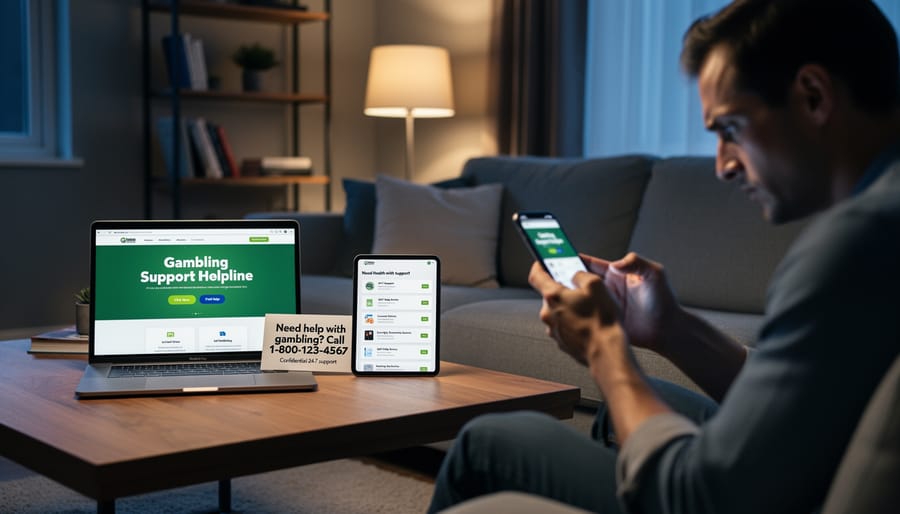
When you’re struggling, knowing exactly where to turn can make all the difference. Canada offers several dedicated helplines where trained professionals understand what you’re going through and can provide immediate support without judgment.
The Problem Gambling Helpline (1-866-531-2600) operates 24/7 across Canada, offering confidential support in multiple languages. When you call, you’ll speak with someone who understands gambling concerns and can help you explore your options, whether you’re looking for information, need someone to talk to, or want to connect with local services. Many callers find relief just in speaking with someone who truly gets it.
For mental health crisis support, the Canada Suicide Prevention Service (1-833-456-4566) provides 24/7 assistance by phone or text. If you’re experiencing overwhelming anxiety, depression, or thoughts of self-harm related to gambling stress, this line offers immediate emotional support and safety planning. The counselors are trained to help during your darkest moments.
Kids Help Phone (1-800-668-6868) serves young people up to age 29 through phone, text, or online chat. If gambling concerns are affecting your mental health and you’re more comfortable texting, this can be an accessible first step.
What should you expect when reaching out? You won’t face judgment or pressure. These services exist to listen, support, and help you find your path forward. Many people who call describe feeling heard for the first time. You don’t need to have all the answers before reaching out—that’s what these services are here to help you figure out together.
Provincial and Community Services
Across Canada, communities recognize that gambling challenges affect people differently depending on where they live. That’s why every province and territory offers specialized support tailored to local needs and cultures.
In Ontario, ConnexOntario provides 24/7 confidential information about local counseling services and support groups. British Columbia residents can access the Provincial Problem Gambling Program, which connects people with free counseling through community agencies. Quebec’s Gambling: Help and Referral service offers support in both French and English, understanding that language matters when you’re seeking help.
The Atlantic provinces collaborate through regional networks, ensuring that even smaller communities have access to trained mental health professionals who understand gambling-related concerns. Prairie provinces like Alberta and Saskatchewan offer rural outreach programs, recognizing that distance shouldn’t be a barrier to getting support.
Many communities host peer support groups where people share experiences and strategies in a judgment-free environment. These groups often meet in community centers, libraries, or virtually, making them accessible regardless of your schedule or location.
Indigenous communities across Canada have developed culturally specific programs that integrate traditional healing practices with contemporary mental health approaches. These services honor the unique perspectives and needs of First Nations, Métis, and Inuit peoples.
Your provincial health authority’s website typically lists available services, or you can contact your family doctor for referrals. Remember, reaching out locally means connecting with people who understand your community’s unique challenges and strengths.
Online and Virtual Support Options
Digital support has opened new doors for people who may not be ready for in-person help or prefer the privacy of online access. Many Canadians find that starting their recovery journey from home feels safer and less overwhelming.
Mobile apps like Gamban and GameQuitter provide practical tools to block gambling sites, track recovery progress, and manage triggers in real-time. These work quietly in the background, offering protection when you need it most. Online therapy platforms such as BetterHelp and Inkblot connect you with licensed therapists who understand gambling-related mental health challenges, often with flexible scheduling that fits around work and family commitments.
Peer support forums create spaces where people share their experiences without judgment. Sites like Gambling Therapy and In The Rooms offer 24/7 community support, which can be especially valuable during difficult moments when traditional services aren’t available.
Self-guided programs, including those offered by CAMH and the Responsible Gambling Council, let you work through recovery materials at your own pace. These resources include workbooks, video modules, and interactive exercises designed to help you understand your relationship with gambling and develop healthier coping strategies.
Remember, online support isn’t meant to replace professional help when you need it—it’s another pathway toward healing that meets you where you are today.
Financial Counseling and Practical Help
Gambling challenges often bring serious financial stress that can worsen anxiety, depression, and feelings of shame. You don’t have to figure this out alone. Organizations like Credit Counselling Canada offer free, confidential help with debt management and budgeting, specifically understanding the unique pressures gambling creates. Many provinces also have dedicated financial counselling services through their problem gambling programs that connect money management support with mental health resources.
Sarah, who struggled with online gambling, shares: “Facing my debt felt impossible until a financial counsellor helped me create a realistic plan. Just knowing there was a path forward lifted so much weight off my shoulders.”
These services aren’t about judgment—they’re about practical solutions. Counsellors can help you communicate with creditors, set up payment plans, and regain control of your finances. This practical support directly improves mental wellbeing by reducing the constant worry that keeps many people stuck in harmful gambling patterns.
Personal Stories: Finding the Way Forward
Recovery looks different for everyone, but every journey starts with a single step toward help. Here are some stories from people who found their way forward.
Marcus, 34, didn’t realize his online poker habit was affecting his mental health until he couldn’t sleep anymore. “I was anxious all the time, checking my phone constantly, hiding my losses from my partner,” he shares. After his sister encouraged him to call a helpline, he connected with a counselor who specialized in gambling issues. “That first conversation changed everything. I wasn’t judged. Someone finally understood what I was going through.” Today, Marcus attends a weekly support group and says talking openly with others who’ve been there has been essential to his recovery.
For Samira, 29, the turning point came during a particularly dark moment when gambling had consumed most of her savings. “I felt so ashamed I didn’t want to tell anyone, but the isolation was making everything worse,” she recalls. She found an online peer support community where she could share anonymously at first. “Reading other people’s stories helped me realize I wasn’t alone and that recovery was possible.” With support from both online connections and a therapist, Samira developed healthier coping strategies for stress that didn’t involve gambling.
David, 56, had been gambling for decades before his adult children sat him down for a difficult conversation. “I was defensive at first. I didn’t think I had a problem,” he admits. His family doctor referred him to a community mental health program that offered both individual counseling and family sessions. “Having my family involved in my recovery made such a difference. They learned how to support me without enabling, and I learned I didn’t have to handle this alone.”
What these stories share is courage—the courage to reach out, to be honest about struggling, and to accept support. Each person found a different path: helplines, peer support, therapy, family involvement. There’s no single right way to seek help.
If you recognize yourself in any of these stories, know that recovery is possible. The resources available today are more accessible and understanding than ever before. Whether you start with a phone call, an online chat, or a conversation with someone you trust, that first step toward help is a step toward healing. You deserve support, and there are people ready to walk alongside you on this journey.

Supporting Someone You Care About
Watching someone you care about struggle with gambling can feel overwhelming, but your support truly matters. The way you approach conversations and offer help can make a significant difference in their recovery journey.
Start by choosing a calm, private moment to talk. You might say something like, “I’ve noticed you seem stressed lately, and I’m worried about you. Can we talk?” or “I care about you, and I’m here to listen without judgment.” Avoid accusations or ultimatums—instead, focus on specific behaviors you’ve observed and how they’ve affected you both. Remember, gambling problems often stem from deeper emotional pain, and shame only makes things worse.
Listen more than you speak. When your loved one does open up, resist the urge to immediately fix everything or lecture. Simple responses like “That sounds really difficult” or “Thank you for trusting me with this” create space for honest conversation. Ask what kind of support they need rather than assuming you know best.
Setting boundaries is essential for both of you. While you want to be supportive, taking over their responsibilities or lending money often enables the behavior rather than helping. You can say, “I love you and I’m here for you, but I can’t keep covering your bills. Let’s find resources together instead.” This isn’t abandonment—it’s healthy support.
Maria’s story shows how this works in practice. When she discovered her brother’s gambling problem, she offered to attend his first counseling appointment with him and researched local support groups together. She made it clear she wouldn’t provide money but would always provide emotional support. Today, he’s eighteen months into recovery, and their relationship has never been stronger.
Remember to care for yourself too. Supporting someone through recovery can be emotionally draining. Consider joining a support group for families affected by gambling—you don’t have to navigate this alone. Your wellbeing matters just as much as theirs.
Taking the First Step Today
You don’t have to have all the answers figured out before you reach out. Many people wait, thinking they need to hit a certain point or have their thoughts perfectly organized before seeking help. The truth is, recognizing that something needs to change is enough to start.
Making that first call or sending that first message can feel overwhelming. Your hands might shake as you dial. You might rehearse what to say a dozen times. That’s completely normal. Remember, the person on the other end has heard countless stories and understands how hard this moment is for you. They’re there specifically to make this easier.
Start small if you need to. You might begin by browsing websites, reading about others’ experiences, or simply saving a helpline number in your phone. Accessing professional support doesn’t mean committing to a long-term program immediately—it means opening a door and seeing what’s behind it.
Consider reaching out to someone you trust first. Sometimes telling a friend or family member makes the next step feel less daunting. They can sit with you while you make a call or help research resources.
Recovery isn’t linear, and it doesn’t look the same for everyone. Some find relief through counseling, others through support groups, and many through a combination of approaches. What matters is taking that first step today, whatever that looks like for you. Tomorrow’s challenges can wait—right now, you’re already doing something brave.
Taking the first step toward help isn’t a sign of weakness—it’s an act of courage. If gambling has affected your mental health, please know that recovery is absolutely possible, and you don’t have to face this journey alone. Thousands of Canadians have found their way back to wellness, and the same support is available to you today.
Throughout this article, we’ve shared resources specifically designed to support you: national helplines like the Problem Gambling Helpline (1-866-531-2600), provincial programs offering free counseling, online support communities, and mental health services that understand the unique challenges of gambling-related struggles. Whether you reach out to a crisis line, connect with a therapist, join a support group, or simply talk to someone you trust, each action matters.
Remember Sarah’s story and others like hers—people who found hope even in their darkest moments. You deserve that same hope and healing. If you’re not ready to take action today, bookmark these resources. When you are ready, support will be waiting. Your wellbeing matters, and asking for help is the bravest thing you can do.